What Is a Sunamp Thermino Heat Battery and How Does It Work?
Short answer: A Sunamp Thermino is a compact heat battery that stores hot water using phase change material rather than a traditional hot water cylinder. It provides instant hot water, takes up far less space, and works especially well with electric heating systems, solar PV, and low-carbon energy setups.
What is a heat battery?
A Sunamp Thermino is a hot water heat battery designed to replace or supplement a conventional hot water cylinder. Instead of storing large volumes of hot water, it stores heat using advanced phase change material and releases that heat on demand to produce hot water.
This allows the unit to deliver mains-pressure hot water without the bulk, standing heat losses, or structural requirements of a traditional cylinder.
Sunamp Thermino units are commonly used in homes, apartments, commercial buildings, and retrofit projects where space, efficiency, or carbon reduction are priorities.
How does a Sunamp Thermino work?
At the core of the Sunamp Thermino is a phase change material that melts and solidifies at a specific temperature. When the system charges, electricity heats the material and stores thermal energy. When hot water is required, that stored heat is released rapidly through an internal heat exchanger.
This process allows the Thermino to deliver hot water almost instantly, without the need to keep a full tank of water hot at all times.
Unlike conventional systems, there is no large volume of standing hot water, which significantly reduces heat loss and improves efficiency.
Why heat batteries are different from hot water cylinders
Traditional hot water cylinders rely on storing heated water, which means energy is constantly lost through the cylinder walls even when no hot water is being used.
A heat battery like the Sunamp Thermino stores energy, not water. This results in:
- Lower standing heat losses
- Smaller physical footprint
- Improved efficiency in intermittent use
- Greater flexibility in installation
This makes heat batteries particularly suitable for modern low-energy buildings and retrofit scenarios.
Where can a Sunamp Thermino be used?
Sunamp Thermino units are extremely versatile and can be installed in a wide range of settings.
Homes and apartments
In residential properties, Thermino units are often installed in cupboards, utility spaces, or kitchens where a traditional cylinder would not fit. They are especially useful in flats and apartments where space is limited.
Commercial and public buildings
For offices, care homes, schools, and community buildings, heat batteries provide a reliable hot water solution without the maintenance burden of larger plant systems.
Buildings without gas supply
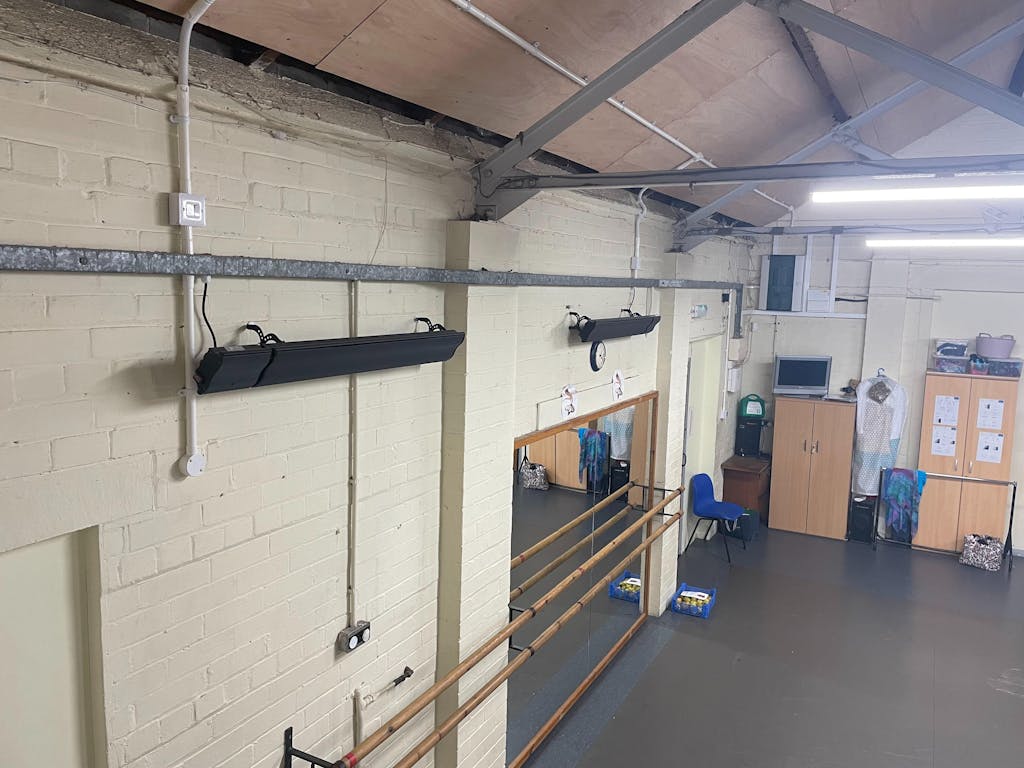
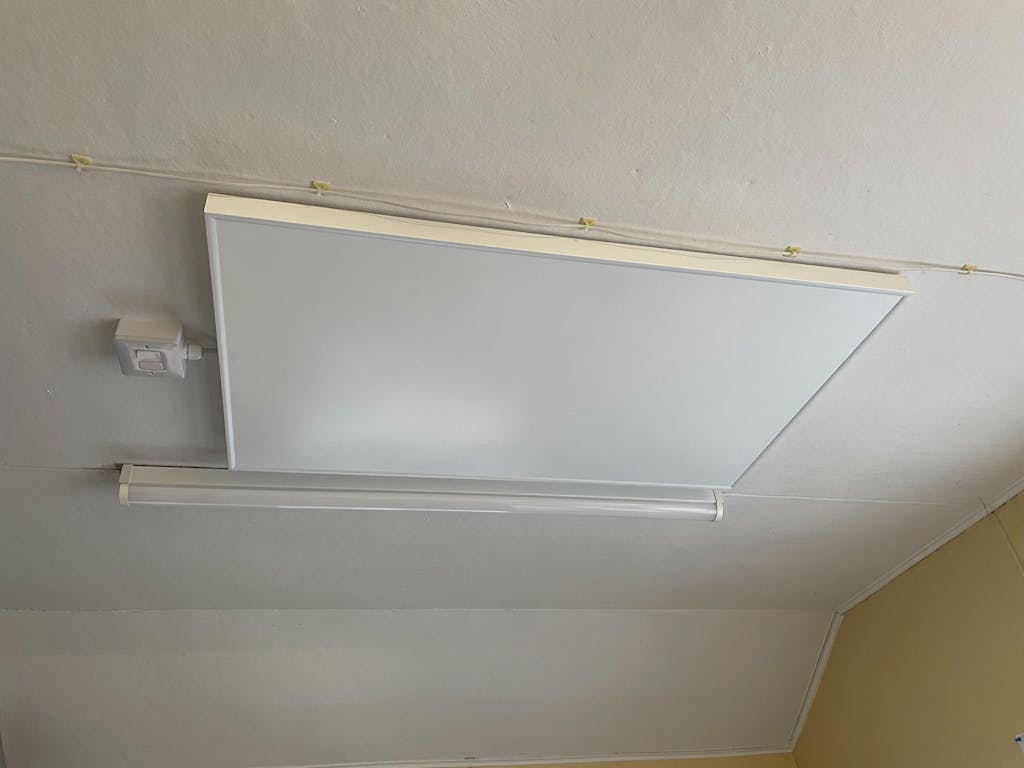
Heat batteries are particularly well suited to buildings that rely on electricity rather than gas. They pair naturally with electric heating solutions such as infrared panels and bar heaters.
If you are exploring electric heating options more broadly, see Is Infrared Heating a Good Option for Buildings Without Gas Supply?.
How Sunamp Thermino works with renewable energy
One of the biggest advantages of a Sunamp Thermino heat battery is its compatibility with renewable electricity.
Thermino units can be charged using:
- Solar PV systems
- Off-peak electricity tariffs
- Smart energy management systems
This allows energy to be stored when electricity is cheapest or cleanest, then used later for hot water without additional grid demand.
This approach fits well with low-carbon heating strategies and complements systems such as infrared heating, which also operate electrically.
If you are exploring how heat batteries fit into a wider low-carbon heating setup, it is also worth considering how hot water storage works alongside electric space heating and solar generation. Many buildings now combine heat batteries with electric heating systems and on-site renewables to create a fully gas-free energy solution. You can read more about how infrared heating and solar PV work together in modern buildings in our Infrared Heating and Solar PV.
Is a Sunamp Thermino efficient?
Because a heat battery stores thermal energy directly and releases it on demand, overall efficiency is high. There are no flues, no combustion losses, and no circulating pumps running continuously.
Efficiency is particularly noticeable in buildings with irregular hot water demand, where traditional cylinders lose heat throughout the day regardless of use.
How big is a Sunamp Thermino compared to a cylinder?
One of the most common reasons people choose a Thermino unit is its compact size. Compared to a standard hot water cylinder, a Thermino can be several times smaller while delivering comparable hot water performance.
This opens up installation options that would not otherwise be possible, especially in retrofit projects and space-constrained buildings.
Is Sunamp Thermino suitable for retrofit projects?
Yes. Sunamp Thermino units are particularly well suited to retrofit installations. Their compact size, lack of flues, and electrical operation make them easier to integrate into existing buildings.
This is especially relevant for older properties, flats, and buildings undergoing energy efficiency upgrades.
How does Sunamp Thermino fit into a modern electric heating system?
As more buildings move away from gas, heating and hot water systems are increasingly designed around electricity. Sunamp Thermino provides a hot water solution that aligns perfectly with this shift.
When paired with electric heating such as infrared panels or bar heaters, it allows a building to operate without gas while maintaining comfort and hot water performance.
You can view the available products in the Sunamp Thermino ePlus collection.
So what is a Sunamp Thermino, in simple terms?
A Sunamp Thermino is a compact, efficient heat battery that replaces the need for a traditional hot water cylinder. It stores energy rather than water, delivers hot water on demand, and integrates easily with modern electric and renewable energy systems.
For buildings looking to reduce space requirements, improve efficiency, and move away from gas, it offers a future-ready hot water solution.