
INFRARED HEATING SOLUTIONS
Infrared Heating for Garages & Workshops
THE APPLICATION
Garages and workshops are no longer just places to park a car. Many homeowners use them as hobby rooms, workshops, home gyms or practical workspaces. However, keeping these spaces warm can be difficult, especially during colder months. Garages often have limited insulation, large doors that open frequently, and cold surfaces that make traditional heating inefficient.
Conventional heating methods such as electric radiators or fan heaters rely on warming the air. In garages and workshops, this warm air quickly escapes when doors are opened, leading to high energy use and uneven comfort. Infrared heating works differently by delivering radiant heat directly to people, tools and surfaces rather than the surrounding air.
This makes infrared heating particularly effective in practical spaces where airflow and temperature fluctuations are common. Heat stays where it is needed, providing reliable comfort even in draughty or partially insulated garages.
Infrared heaters are slim, silent and can be mounted on walls or ceilings to keep floors clear. This makes them ideal for workshops with machinery, storage or workbenches, while providing fast, targeted warmth exactly where you are working.
Our heating collection
Heating designed
around your space.
Explore our range of infrared heating - from discreet ceiling and wall panels to contemporary glass, mirror and high-output specialised heating solutions.

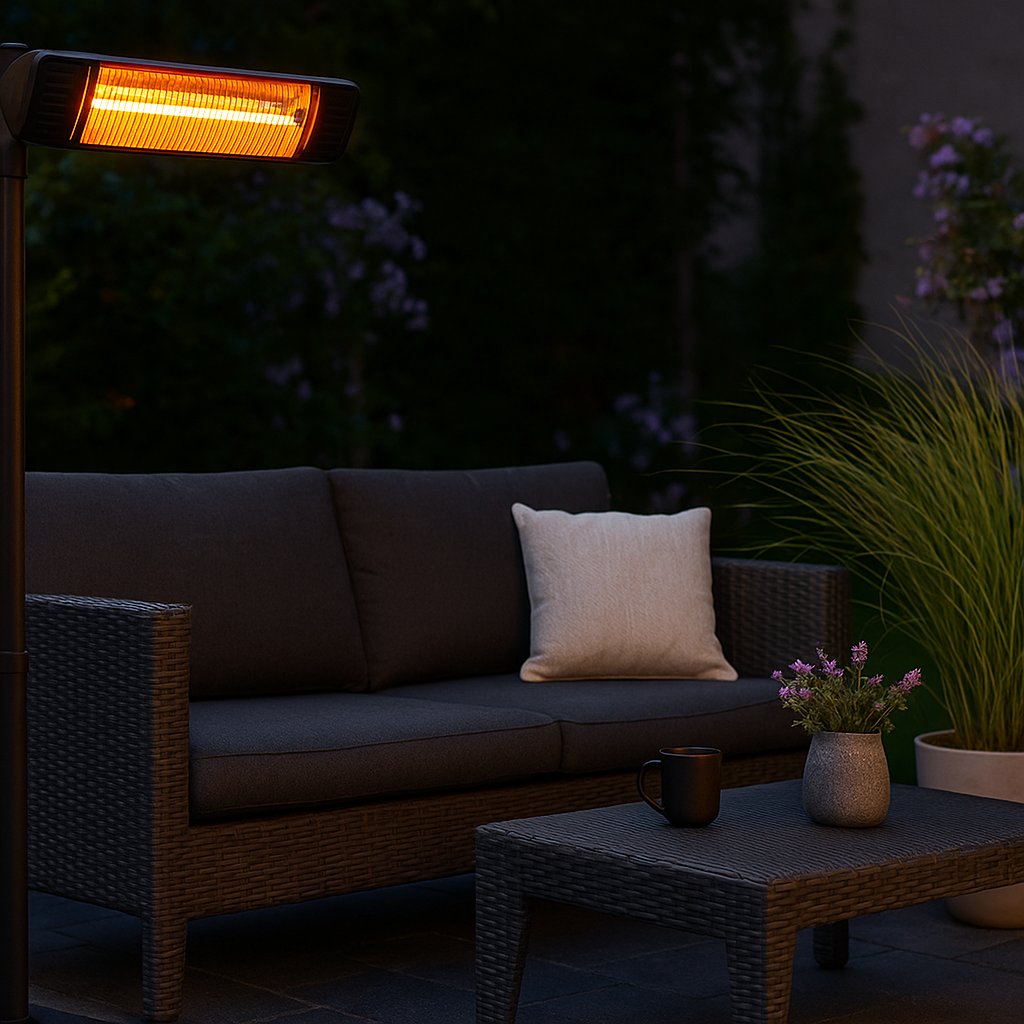


Where infrared heating works best in garages and workshops
Infrared heating is especially effective in garages and workshops where people are working in fixed areas for short or extended periods. Rather than attempting to heat the entire volume of cold air, infrared heaters focus warmth directly onto work zones, tools and occupants.
This makes them ideal for DIY workshops, mechanics’ garages, hobby rooms and home gyms. Because infrared heat is not affected by airflow, opening garage doors does not immediately strip away warmth, allowing the space to remain comfortable while in use.
Wall and ceiling mounted heaters also help preserve valuable floor space, keeping work areas clear and safe.
Related guides

Calculate the right infrared heating for your space
Use our wattage calculator to determine the correct infrared heating setup based on room size, insulation, and how the space is used.
Performance and efficiency considerations
When specifying infrared heating for a garage or workshop, factors such as ceiling height, insulation level and how the space is used all play an important role. Poorly insulated garages benefit from radiant heating because surfaces retain warmth even when air temperatures fluctuate.
Ceiling-mounted heaters are often preferred in workshops to avoid obstruction, while wall-mounted options work well above workbenches or equipment areas. Positioning heaters to maintain a clear line of sight to occupied zones ensures the most efficient performance.
Infrared heating is particularly suited to intermittent use. Heaters warm up quickly, making them ideal for spaces that are only used at certain times rather than continuously throughout the day.
For garages connected to the home or used as hobby rooms, pairing infrared heaters with effective insulation improvements can significantly improve comfort and reduce running costs. Simple measures such as sealing gaps and insulating doors help maximise performance.
Need supply and installation for your project?
We can arrange a site survey through our network of electricians and provide a supply and installation quote. Tell us about your building, postcode and the areas you want to heat so we can discuss suitable options and installation availability.
FAQS
Frequently asked questions
Is infrared heating effective in cold garages?
Yes. Infrared heating works by warming people and surfaces directly, making it effective even in cold or poorly insulated garages where warm air would normally escape.
Can infrared heaters be safely used around tools and machinery?
Yes. Infrared heaters have no exposed elements or moving parts and can be mounted safely out of the way, making them suitable for workshop environments.
Do infrared heaters need to run constantly?
No. Infrared heaters provide instant warmth and are well suited to short or intermittent use, reducing overall energy consumption.
Can I control infrared heating remotely?
Yes. Compatible smart controls allow scheduling and temperature management, helping you heat the space only when required.